Certified Mold Inspection & Air Quality Testing in Burnaby, BC
Certified residential mold testing and mold inspection services in Burnaby, BC give you a clear, documented picture of what's in your home before spending money on removal. Mold hides in walls, attics, crawl spaces, and HVAC ducts long before it's visible — by the time you see a patch on the wall, the colony behind it is usually far larger. Our certified mold inspection and testing team uses air quality sampling, moisture meters, and thermal imaging to find it, identify it, and tell you exactly what needs to happen.
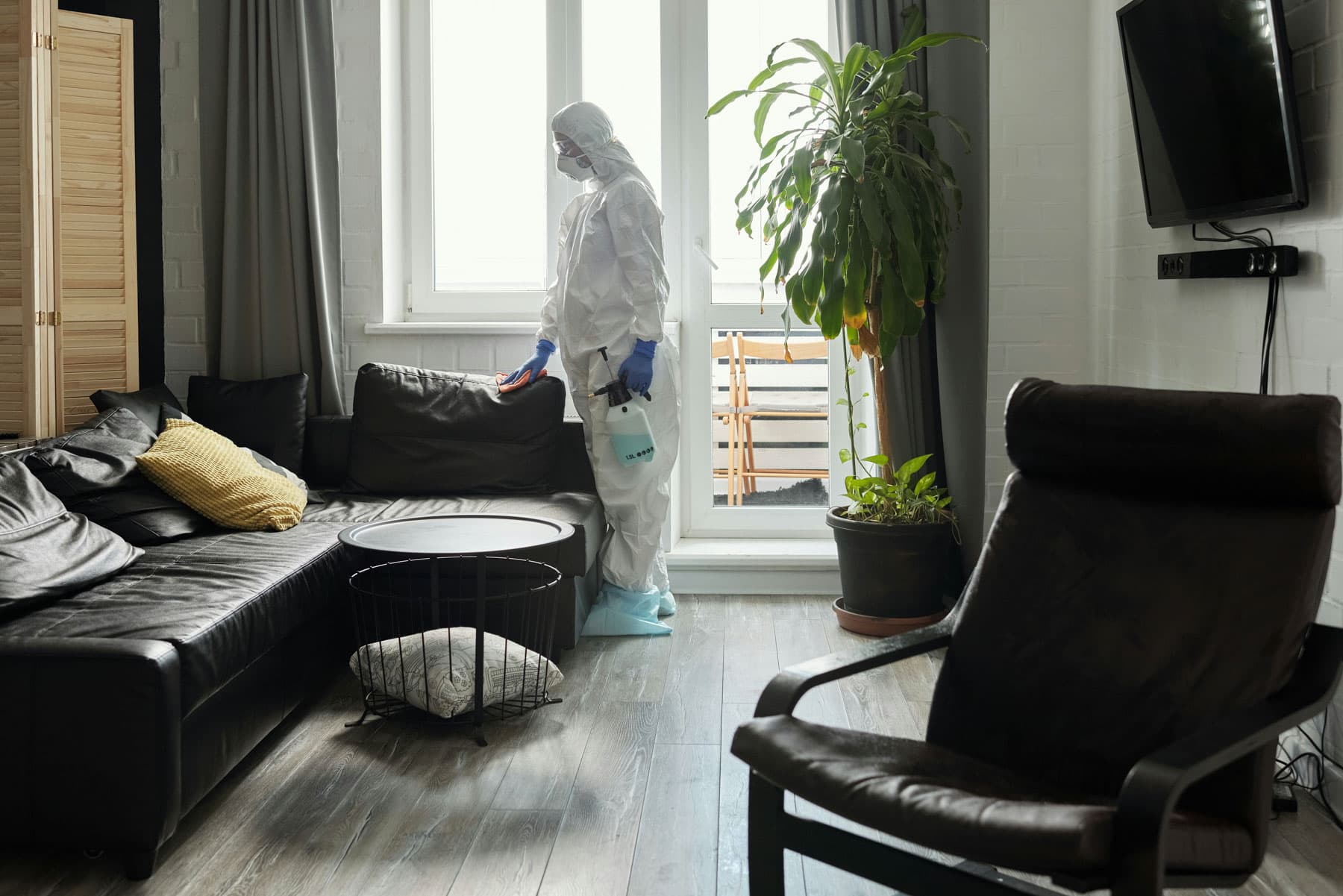
How do you test for mold in your house?
The short answer: air sampling, moisture mapping, and a physical inspection — done by a certified professional.
Residential mold testing in Burnaby involves three components working together. First, a visual inspection of all accessible areas — walls, ceilings, attic, basement, crawl space, and around plumbing. Second, calibrated moisture meter readings to detect elevated moisture levels in materials that look dry on the surface. Third, air quality sampling: spore trap cassettes collect airborne mold particles from inside the home and outdoors simultaneously. Samples go to an accredited lab, which identifies species and counts spores per cubic meter of air. The indoor sample is compared to the outdoor baseline — if indoor counts are significantly elevated, or if a species is present indoors but not outdoors, that indicates an active indoor mold source.
DIY mold test kits (the kind you leave on a surface for 48 hours) measure what settles on a petri dish, not what's airborne. They can't tell you the spore concentration in the air, can't detect hidden growth, and aren't accepted by insurers, lenders, or property managers. Professional mold testing is the only result with any weight behind it.
Are mold tests accurate?
Professional lab-based mold tests are accurate. DIY tests are not meaningful.
Air sampling by a certified mold inspector using spore trap cassettes, sent to an AIHA-accredited laboratory, gives you a reliable count of airborne mold by species. The methodology is standardized and the results are reproducible. That's why lenders, property managers, insurance adjusters, and strata councils accept them.
The important nuance: a single air sample is a snapshot in time. Spore counts fluctuate with humidity, HVAC cycling, recent disturbance, and season. A thorough mold inspection combines air sampling with physical moisture readings and visual assessment — because a high moisture reading in a wall cavity is meaningful even on a day when airborne spore counts happen to be low. The combination of methods is what makes professional residential mold testing reliable.
Surface swab tests identify what's growing on a specific surface, which is useful when you can see growth and want to know the species — particularly when distinguishing between common surface molds and Stachybotrys. They don't measure concentration or tell you whether spores are airborne.
What are signs of mold sickness?
Symptoms that improve when you leave the building are the clearest indicator of mold-related illness.
Mold-related health effects are most commonly respiratory and allergic in nature. Common signs include: persistent coughing or wheezing that doesn't respond to standard treatment, nasal congestion and runny nose worse at home than away, itchy or watering eyes, skin irritation, recurring headaches, and fatigue. In people with asthma, mold exposure typically triggers more frequent attacks. These symptoms often improve noticeably when the affected person spends time away from the home — on vacation, at work, or staying elsewhere — which is the most important pattern to notice.
More serious effects are associated with prolonged exposure to high concentrations of mycotoxin-producing species like Stachybotrys chartarum (black mold). These can include persistent headaches, difficulty concentrating, and upper respiratory infections that don't resolve. Children, the elderly, and people with compromised immune systems are most vulnerable. It's worth noting that mold-related illness is commonly misdiagnosed as seasonal allergies or recurrent colds — if symptoms pattern to location and improve when you leave the house, get a mold inspection.
If anyone in your household is experiencing these symptoms and there's any history of moisture, flooding, or musty smells, a professional mold inspection and air quality test is worth the cost.
Residential mold testing vs. commercial mold inspection — what's different
Residential mold testing in Burnaby homes focuses on common problem areas: attic ventilation failures, basement moisture, bathroom exhaust paths, and crawl space conditions. The scope is typically a single unit or home. Commercial mold inspection involves additional complexity — HVAC systems that circulate air between suites, WorkSafeBC compliance documentation, strata disclosure requirements, and multi-party coordination. We do both. The methodology is the same; the scope and documentation requirements differ.
When to get a mold inspection vs. going straight to remediation
If you can already see widespread visible mold on a large surface, a formal air test isn't always the first step — sometimes it's faster to assess the scope directly and begin remediation. But these situations call for a formal mold inspection and testing report:
- You smell something musty and can't locate the source
- Occupants have unexplained respiratory symptoms or allergy patterns tied to the home
- You're buying or selling a property and need a documented mold status
- Water damage occurred and you want to confirm no mold established
- A lender, insurer, or property manager requires a third-party report
- You want a baseline air quality reading before or after renovation work
What the mold inspection report tells you
Our written inspection report documents every area checked, moisture readings by location, photo evidence of any findings, lab results with species and spore counts, an outdoor baseline comparison, and a plain-language remediation recommendation. For real estate transactions, it's suitable for submission to the buyer's agent or lender. For insurance claims, it provides the scope documentation your adjuster needs. And if the result is clear — no elevated mold — you have documentation of that too, which has real value for a sale.
What's Included
- Visual inspection of all accessible areas including attic, basement, and crawl space
- Calibrated moisture meter readings on walls, floors, and ceilings
- Thermal imaging to detect hidden moisture pockets behind drywall
- Air quality sampling using spore trap cassettes — indoor and outdoor baseline
- Accredited lab analysis identifying mold species and spore concentration
- Surface swab sampling for visible mold species identification
- Written report with photos, moisture readings, and lab results
- Plain-language remediation recommendations with scope and next steps
When to Call Us for Mold Inspection & Testing
- Persistent musty smell with no visible source — residential or commercial
- Unexplained allergy or respiratory symptoms in occupants that improve away from home
- Water damage or past leak — confirming no mold established during or after drying
- Buying or selling a home requiring documented mold inspection results
- Insurance claim requiring third-party mold testing documentation
- Lender or property manager requiring a professional air quality report
- Pre-renovation baseline to protect against future liability
How We Do It
- 1Book an inspection at a time that works for you — we confirm the full scope in advance
- 2Certified inspector conducts a thorough walkthrough of all accessible areas
- 3Moisture meter readings taken at all walls, ceilings, and floors of concern
- 4Air samples collected inside affected areas and outdoors simultaneously
- 5Surface swabs taken where visible growth needs species identification
- 6Samples sent to accredited lab for analysis
- 7Written report with lab results delivered within 24–48 hours
- 8Findings reviewed in plain language with clear remediation recommendations
We provide mold inspection & testing in Burnaby and surrounding Metro Vancouver communities including New Westminster, Coquitlam, Port Coquitlam, Port Moody and more. See all areas we serve →
Mold Inspection & Testing — Common Questions
Straightforward answers to what people usually ask us.
Need Mold Inspection & Testing in Burnaby?
Give us a call or fill out the form. We'll get a certified technician to you quickly for mold remediation services.
Available 24 hours a day, every day of the year.